
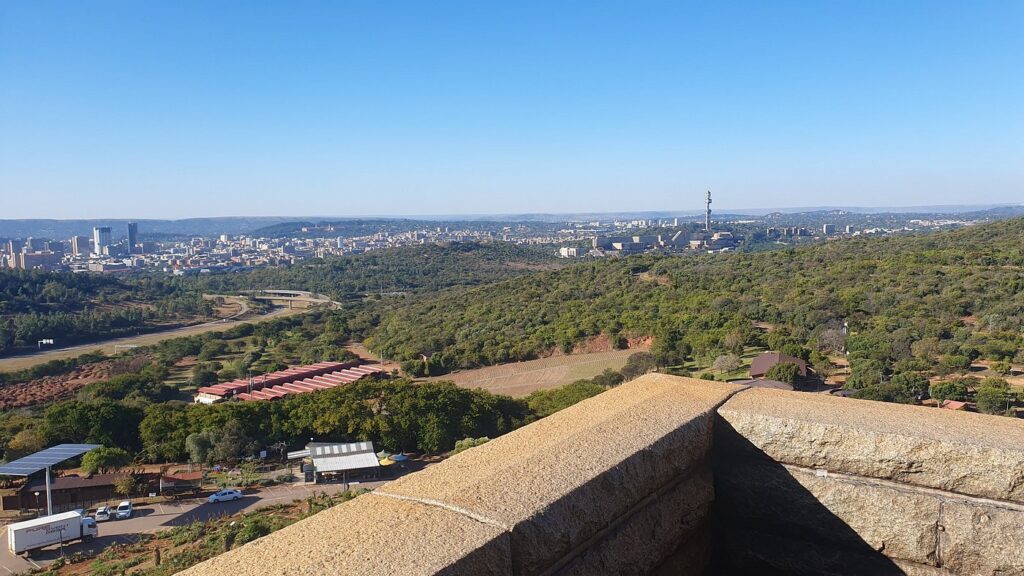
For many in Pretoria and across Gauteng, December 16th is more than just a public holiday. It’s a day marked by the quiet contemplation of a complex past, a time to reconcile with a history that has shaped the very fabric of our communities. Perhaps you’ve driven past the imposing Voortrekker Monument, stood beneath the majestic Union Buildings, or walked the serene grounds of Freedom Park. These landmarks, so central to our capital city, stand as silent witnesses to a history of conflict and a hopeful future of healing. Yet, for many, the full story behind these monuments remains an untold chapter, a puzzle of dates and events that can feel distant and disconnected.

The Day of Reconciliation, officially celebrated annually, is a powerful invitation to bridge that gap. It’s a chance to move beyond the headlines and into a deeper understanding of how our nation, and our city, came to be. For those who seek more than just a day off, who yearn to grasp the true meaning of this national holiday, the journey from confusion to clarity begins with a willingness to look closely at our shared past.
Beyond the Textbooks: The Power of a Guided Journey
The history of December 16th is a remarkable and uniquely South African story of parallel narratives. On this day in 1838, the Battle of Blood River occurred, a moment that became central to Afrikaner identity. Decades later, on the very same date in 1961, the armed wing of the African National Congress, Umkhonto we Sizwe (MK), was founded to fight against the apartheid government. By choosing this day as a national holiday in 1995, the post-apartheid government made a bold and symbolic move: to unite two opposing histories into a single narrative of reconciliation.
Understanding this dual heritage is the key to unlocking the true meaning of the day. For an ordinary citizen, however, navigating these historical complexities can be a daunting task. This is where a professional, guided tour becomes an invaluable tool. It’s not just about being driven from point A to point B; it’s about having a knowledgeable guide who can provide the context, the stories, and the human perspective that a signpost or a plaque can never fully convey.
A guided Pretoria reconciliation tour from La Luonde Tours, for instance, directly helps citizens and tourists by solving the problem of a fragmented understanding of history. Instead of seeing disconnected landmarks, you experience a cohesive story. Your guide can expertly link the monuments of the past to the realities of the present, answering questions and providing insights that help you connect with the national reconciliation journey on a personal level.
The Reality of Reconciliation: A Data-Driven View
While the Day of Reconciliation is a symbolic step, the journey toward a truly united nation is ongoing. It is a process that requires continuous effort and commitment from all citizens.
According to the South African Human Rights Commission’s (SAHRC) 2021/2022 Annual Report, South Africa still faces significant challenges, with a notable number of complaints related to equality and human rights violations. This data shows that despite our progress, there are still deep-seated issues that require attention and dialogue. A guided tour of our historical sites serves as a reminder of how far we have come while also acknowledging how much work remains.
On a more positive note, a 2019 survey conducted by Afrobarometer revealed that 73% of South Africans believe that reconciliation is possible. This statistic, while not a measure of full healing, highlights a national resilience and a collective hope for a more unified future. This optimism is the very engine that drives the spirit of December 16th. It is a day dedicated to nurturing that hope, proving that a shared future is not just a dream but a tangible goal we can all work towards.
Additionally, a recent report from Statistics South Africa indicated a steady increase in domestic tourism to historical sites, particularly among younger generations. This trend suggests a growing desire among South Africans to understand their history and heritage better. Guided tours provide the perfect gateway for this exploration, offering a structured, safe, and engaging way to confront a sometimes-painful past.
A Pathway to Understanding Reconciliation
The path to reconciliation is not about forgetting the past; it’s about confronting it to heal. It’s about acknowledging the pain and the injustices, but also celebrating the moments of courage, forgiveness, and unity.


For residents of Pretoria, the monuments and memorials of our city offer a unique and tangible connection to this history. A tour that connects the stories of the Voortrekker Monument to the powerful narratives at Freedom Park and the symbol of a unified nation at the Union Buildings provides a complete picture. La Luonde Tours specializes in providing a safe and enriching experience that helps tourists and locals alike understand their national heritage. This experience is more than just sightseeing; it is an act of historical immersion that can foster empathy and a deeper sense of national belonging.
By participating in a guided exploration of Pretoria’s historical landscape, you are taking an active role in your country’s ongoing journey. You are moving from a passive observer to an engaged participant in the story of our nation. It is a chance to not only learn about our history but also to feel its weight and its hope.
A Shared Future


The Day of Reconciliation stands as a testament to our nation’s resilience and its enduring commitment to peace. It is a day to reflect on the power of dialogue, the necessity of forgiveness, and the strength found in our diversity. While the historical markers in Pretoria tell a story of division, the act of a diverse group of people exploring them together on a guided tour tells a powerful story of unity.

